The short answer
Foreskin retraining works by applying gentle, sustained tension to the shaft skin so it gradually expands and begins to stay forward over the glans. It relies on tissue expansion, the same biological principle behind ear gauging and the tissue expanders plastic surgeons use. It is slow, measured in months and years rather than weeks, and it will not recreate the specialized tissue removed by circumcision. What many men report is meaningful glans coverage, less chafing, and returning sensation over time.
If you have ever wondered whether the coverage you were born without can come back, you are not alone, and the honest answer is more encouraging than most people expect. Your body already knows how to make skin adapt under tension. It does it when people gauge their ears, and surgeons rely on it every day when they place tissue expanders under the skin to prepare for reconstruction. Foreskin retraining taps into that exact same mechanism, just applied gently and patiently to the shaft skin you still have.
What it is not is a quick fix or a way to reverse circumcision entirely. It is a gradual, self-directed process that rewards consistency over intensity. Below we will walk through how the tension actually encourages the skin to come forward, what the research does and does not tell us, how long it realistically takes, and where the honest limits are so you can decide with clear eyes.

The core idea: gentle tension, gradually applied
Every method of foreskin retraining, whether you use your hands or a device, does the same thing: it holds the shaft skin forward over the glans under a light, steady pull. Skin is a living, responsive organ. When you keep it under mild sustained tension, the cells respond by adapting to the new length, so that over weeks and months more skin sits forward and stays there. This is tissue expansion, and it is well documented in medicine. Plastic surgeons deliberately stretch skin to create extra coverage for reconstructive work, and the biology of how skin responds to mechanical stress has been studied directly (see the research on skin and soft tissue expansion).
The keyword is gentle. The response you want is comfortable adaptation, not strain. Too much force does not speed things up; it produces pain, irritation, or setbacks instead of progress. Gradual and consistent always beats aggressive and sporadic.
Your body builds coverage the same way it responds to a gauged earlobe: not overnight, but reliably, when the tension is light and you stay consistent.
How people actually apply the tension
There is no single correct tool. The methods differ mainly in how they hold the skin forward and for how long. Most people settle on whatever they can wear comfortably for hours at a time, because time under gentle tension is what matters most.
- Manual tugging: Pulling the shaft skin forward over the glans by hand and holding it for short sessions, repeated through the day. It costs nothing and gives you complete control over the tension, but it is hard to keep up for long stretches.
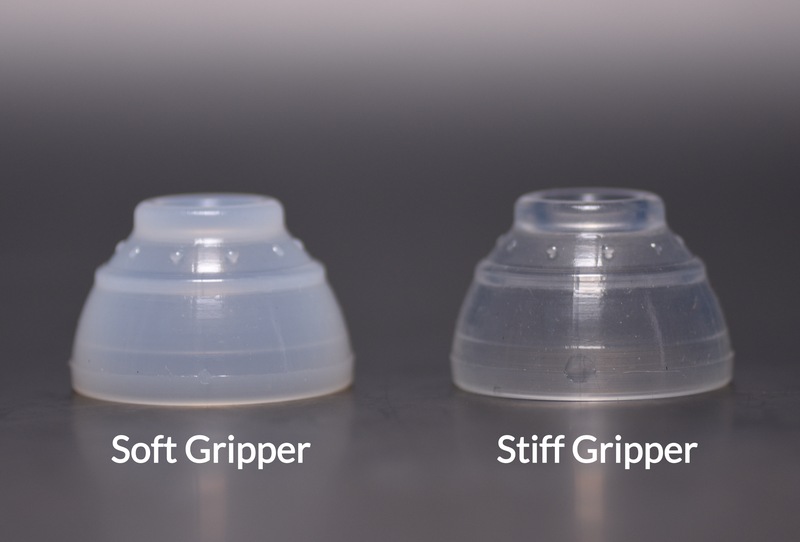
- Elastic tension devices: A gripper holds the skin and connects to a light elastic strap, keeping a steady, hands-free pull for hours while you go about your day. This is the category a retainer falls into.
- Weighted methods: Attaching modest weight so gravity provides the pull. Historically popular, though many people prefer elastic tension because it stays consistent whether you are standing, sitting, or moving.
- Dual-tension approaches: Designs that hold the glans while drawing the skin forward, applying tension to both inner and outer skin at once.
- Tape methods: Older do-it-yourself setups that tape the skin and connect it to an elastic band. Common before purpose-built tools existed.
Try this first: Start with the lightest tension that still holds the skin comfortably forward, and focus on wearing time rather than intensity. You are aiming for a tug you can clearly feel, but never one that tips into discomfort. Feeling it is normal and expected; discomfort is the signal to ease off, not proof it is working.
Why it takes as long as it does
Tissue expansion is inherently slow because the skin adapts a little at a time and then needs to settle. That is a feature, not a flaw. Steady, moderate tension gives the healthiest response; pushing harder tends to cause irritation that stalls you rather than progress that lasts. Because of this, retraining is best thought of in seasons, not sessions.
| Time frame | What tends to happen |
|---|---|
| First 1 to 3 months | Getting comfortable with your routine and daily wear. Little visible change yet, and that is normal. |
| 3 to 12 months | Many men start to notice the skin sitting forward more easily and staying there longer. |
| 1 to 2 years | More consistent coverage over the glans, especially when flaccid. |
| 2 to 5 years | The range commonly cited for substantial coverage, though it varies widely by person and starting point. |
Individual results vary a lot. Your starting slack, your skin, your consistency, and simple biology all play a role. Some people move faster than others, and there is no single guaranteed timeline. The one reliable predictor is showing up consistently over the long haul.
Zac's take
The people who get results are almost never the ones tugging hardest. They are the ones who made it easy to wear something comfortable every day and then mostly forgot about it. Retraining rewards patience, not white-knuckling. If a session ever feels like a workout, you are doing too much, not too little. Treat it like a quiet habit rather than a project with a deadline, and time does the heavy lifting for you.
What the science actually shows
Because retraining is almost always self-directed, there is no deep bench of controlled trials measuring exactly how much coverage men gain. The most useful overview comes from a team of plastic and reconstructive surgeons at Amsterdam University Medical Center, who searched PubMed, EMBASE, Web of Science, MEDLINE and Scholar for everything published on the subject (Timmermans et al., International Journal of Impotence Research, 2022). Three things in that review are worth knowing:
- This is not a modern invention. The authors trace foreskin manipulation and the undoing of circumcision back to antiquity, describing a long and turbulent history rather than a recent trend.
- The literature is lopsided. What has been published focuses primarily on surgical techniques and is, in the authors' own words, generally poorly documented. Nonsurgical tension methods are rarely mentioned at all, despite being the commonplace approach among the men actually doing this.
- Results look good, but nobody has measured them. The reviewers concluded that nonsurgical methods have yielded good results with minimal adverse effects, while stating plainly that no proper medical research has been performed to quantify those outcomes. They called for future work on quality of life.
In plain terms: a lot of men report success and the safety record looks reassuring, but the study that would put real numbers on it has not been done.
What is well established is the underlying mechanism. Skin expands under sustained tension. That part is not controversial, and it is why the approach is described in the literature as promising even where the outcome data is thin. The honest framing is that the biology is sound and the lived reports are consistent, while the formal measurement is still catching up.
The mechanism itself is far better documented, because plastic surgeons depend on it. Skin soft tissue expansion is described as one of the most basic and commonly used techniques in plastic surgery for generating extra skin, and a 2022 review in the International Journal of Molecular Sciences set out what actually happens in the tissue (Guo et al., 2022). Sustained mechanical stretch is picked up by cellular adhesion molecules, which switch on signalling pathways and change which genes the cells express. Three cell populations respond: keratinocytes in the surface layer, dermal fibroblasts in the deeper structural layer, and mesenchymal stem cells.
That distinction matters more than it sounds. You are not just pulling slack skin into a new position. Sustained, gentle tension prompts the tissue to build more of itself, which is why a gauged earlobe stays stretched instead of snapping back the moment the jewellery comes out.
The honest limits
This is where clarity matters most. Retraining encourages your existing shaft skin to expand and cover the glans. It does not bring back the specialized structures that circumcision removed, such as the ridged band or the frenulum. A 2011 report summarized in the medical press put it bluntly: stretching can extend skin, but it does not restore the anatomical features that were cut away (see the 2011 commentary). Cleveland Clinic makes the same point in anatomical terms: what you build back is the outer covering, not the inner mucosal layer that was removed, so it will not behave in every way like an intact foreskin. So the coverage you build is a genuine, functional covering, but it is not an exact replica of an intact foreskin.
That said, the benefit many men care about most is real. Keeping the glans covered protects it from constant friction against clothing, which over time can help the surface soften and stay more moist. That is directly connected to the way covered tissue tends to feel more responsive. If you want the deeper background on that, see Why Is My Penis Less Sensitive? and Is Circumcision Numbing Your Sensitivity?. Many men report returning sensation and more comfort as coverage improves, even though a retrained covering will not match every sensory detail of an original foreskin.
One more limit worth planning for, and it comes from that same expansion research. Expanded skin has a well-documented tendency to pull back: the 2022 review lists a high retraction rate among the known problems of tissue expansion, alongside long treatment times and variable skin quality. In practice that means the coverage you build is not automatically permanent the day you stop. Most men treat it as something to maintain rather than a finish line, tapering off gradually rather than stopping abruptly.
Staying safe while you retrain
Done gently, this is a low-risk practice with few serious complications reported. The risks that do exist come from doing too much, too fast. A few sensible ground rules keep you on the safe side:
- Aim for a tug you can feel that stays comfortable. Sensation is fine; discomfort is the line. As a rough guide most men find that point sits somewhere above 24oz. Never push into pain, numbness, or a cold or discoloured glans.
- If anything pinches, tingles, or goes numb, stop and loosen or remove it right away.
- Wear during waking hours and take it off for nighttime, when erections make sustained tension a bad idea.
- Resist the urge to add weight or force to rush results, since overdoing it causes irritation that sets you back.
- Keep the skin and any device clean, and give the tissue rest time to settle and adapt.
It is worth knowing what the clinical caution actually is, rather than guessing. Cleveland Clinic's patient guidance makes three points worth taking seriously before you start:
- You cannot fully control how the skin stretches. It can expand unevenly, which is a good argument for steady, symmetrical, low tension rather than aggressive pulling.
- Overdoing it can cause lasting damage. Their guidance warns that too much force risks permanently damaging skin and the sensory nerves, which is precisely the opposite of what you are aiming for.
- These devices are not FDA approved. Cleveland Clinic notes that retraining devices have not been through FDA approval, and that long-term data confirming effectiveness is still lacking. Worth knowing going in, and one more reason to err gentle rather than aggressive.
Most people who run into trouble were simply pushing harder than the tissue wanted. Gentle and consistent is not just more comfortable, it is genuinely more effective. This practice sits largely outside mainstream urology, so much of the practical guidance comes from the community of men who have done it rather than from a doctor's office. If you have any medical concerns, it is reasonable to talk with a healthcare provider before starting.
The bottom line
Can you get coverage back? For many men, yes, in a real and satisfying way, through gentle sustained tension that gradually encourages the skin forward and keeps the glans covered. Just go in with clear expectations: it is measured in months and years, results vary from person to person, and it builds a functional covering rather than a perfect anatomical copy. If you can make it a comfortable daily habit and let patience do the work, the odds are on your side.
References and sources
- 2022 review, International Journal of Impotence Research (nonsurgical tension methods, outcomes, and the need for more study)
- Research on skin and soft tissue expansion (how skin responds to sustained mechanical tension)
- 2011 CMAJ commentary (stretching extends skin but does not recreate removed anatomy)
- Cleveland Clinic patient guidance (tissue expansion, timelines, and safety cautions)